How to Measure Sub-pF and Sub-10 nH Components with Handheld LCR Tweezers

How to Measure Sub-pF and Sub-10 nH Components with Handheld LCR Tweezers | Siborg Systems

Tweezer-style LCR meters have revolutionized surface-mount device (SMD) troubleshooting since Siborg introduced the original Smart Tweezers in 2005. Today’s advanced instruments—including the LCR-Reader-MPA, R2, and R3—boast test frequencies up to 250 kHz, 0.1% basic accuracy, and comprehensive all-in-one multimeter capabilities.

However, engineers and technicians working with ultra-small RF components face a well-known physical limitation inherent to all tweezer-style instruments: parasitic capacitance and inductance in unshielded test leads.

To solve this challenge, Siborg Systems Inc. introduced patent-pending Open/Short Calibration Boards, enabling handheld tweezer meters to reliably measure passive components below 1 pF and 10 nH—territory previously reserved for expensive benchtop setups.

The Hidden Challenge of Tweezer Parasitics

Whenever an unshielded two-wire probe approaches a circuit component, parasitic fields form between the probe tips:

  • Parasitic Capacitance: The air gap between the tweezer arms acts as a tiny capacitor. As the tips move closer together to clamp a smaller component, this mutual capacitance shifts.
  • Parasitic Inductance: The physical loop created by the tweezer tines introduces residual series inductance.

In typical tweezer meters, parasitic offsets range from 0.014 to 0.249 pF for capacitance and 2.8 to 18.6 nH for inductance, depending directly on the distance between the tips.

While a 0.2 pF or 5 nH offset is negligible when measuring a 10 µF decoupling capacitor, it introduces catastrophic errors when qualifying ultra-small components. As Siborg demonstrated in IEEE publications (AutoTestCon 2022 and the IEEE Instrumentation & Measurement Magazine, August 2023), measuring an inductor below 10 nH without compensating for two-wire test fixture parasitics can lead to relative errors exceeding 100%.

How Siborg’s Offset Calibration Boards Work

Presented at Nepcon Tokyo and the SMTA International Conference in Minneapolis, Siborg’s proprietary calibration fixtures provide a repeatable, standard method for eliminating test-lead offsets.

The calibration boards are specialized dummy PCBs engineered with precision-spaced slots representing standard SMD footprints (such as 0201, 0402, 0603, and 0805):

  1. Geometry-Matched Compensation: Placing the tweezer tips into the exact footprint slot matching the target component fixes the probe spacing to that specific component width.
  2. Offset Nulling: The board allows the meter to determine the baseline parasitic offset at that exact mechanical spacing.
  3. Sub-pF Accuracy: By subtracting these offsets—or letting the meter’s firmware compensate automatically—measurement offsets drop below 0.01 pF for capacitance and 1 nH for inductance.
Parameter Standard Tweezer Offset With Siborg Calibration Board
Residual Capacitance 0.014 pF to 0.249 pF < 0.01 pF
Residual Inductance 2.8 nH to 18.6 nH < 1.0 nH
Smallest Reliable Limit ~10 pF / ~10 nH < 1 pF / < 10 nH

Running an Open/Short Calibration on LCR-Reader

On compatible instruments (such as the LCR-Reader-MPA, R2, and R3), executing a calibration cycle takes less than a minute:

  1. Insert the tips into the appropriate calibration slot on the board.
  2. Push and hold the control joystick to the right until you hear two beeps to initiate the calibration cycle.
Technique Tip: Grip pressure matters. Variations in hand pressure on the tweezer arms can shift readings by up to 0.005 pF or 0.5 nH. Maintaining consistent, gentle pressure during both calibration and measurement ensures maximum repeatability.

Benchtop Precision in Your Pocket

Evaluating high-frequency RF matching networks, precision oscillators, and avionics circuitry no longer demands hauling out a dedicated benchtop network analyzer or four-wire bridge.

By pairing high-frequency test capability (up to 250 kHz) with dedicated Open/Short Calibration Boards, Siborg’s LCR-Reader family bridges the gap between field portability and laboratory-grade metrology.

To learn more about the LCR-Reader product family and calibration accessories, visit lcr-reader.com.
New Model of Popular LCR-meter Enters the Stage of Implementation of the LCR-Reader-R2 Prototype

A new model of the LCR-Reader is in the works. The previous model, the LCR-Reader-R1 has been a well-selling device worldwide. The low price and high accuracy measurements is attractive to professionals and hobbyists alike, looking for an easy-to-use multimeter. Siborg is working on the LCR-Reader-R2 which includes a 0.1% basic accuracy and features a record high 300 kHz test freuqnecy. The new device will possibly have the ability to use 100 Ohm and 1 kOhm signal source impedance allowing abetter in-circuit testing.

LCR-Reader-R2 combines advantages of LCR-Reader-MP and LCR-Reader-MPA due to the ability of switching the test signal source resistance from 100 Ohms as in MPA to 1 kOhm as in MP. The latter strongly increases stability of measurements and works much better for in-circuit measurements. On the other hand, low source impedance effectively increases the actual test measurements. On the other hand, lower source impedance effectively increases the actual test signal applied to the component under test thus reducing the signal-to-noise ratio in some cases.

The device will also be able to test using a 300 kHz test frequency, due to the more advance CPU used. The higher frequency may allow to better measure sub 10 nH inductors.

Multimeter Summer Sale

Siborg is offering up to 30% off on many of their test devices, including LCR-Reader-MPA, LCR-Reader and Smart Tweezers devices. The sale is available in the LCR-Reader Store and Amazon sales channels. The sale runs from August 10 to August 31st at 11:59 EST.

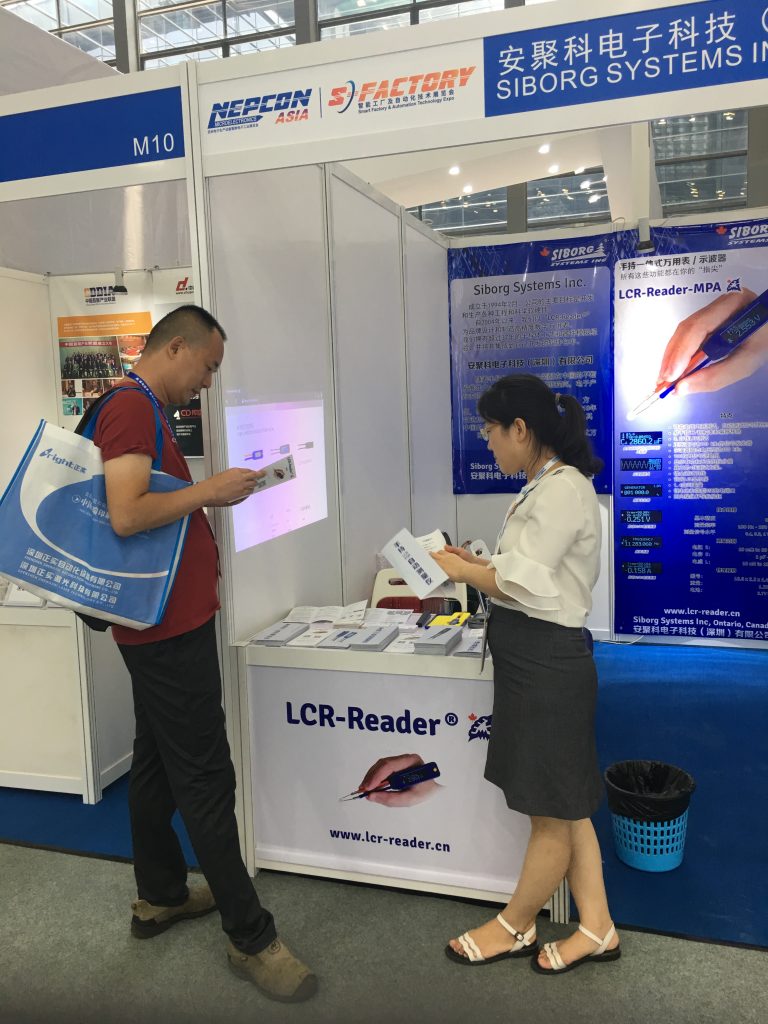
Siborg Presents MPA at Shanghai Nepcon Asia

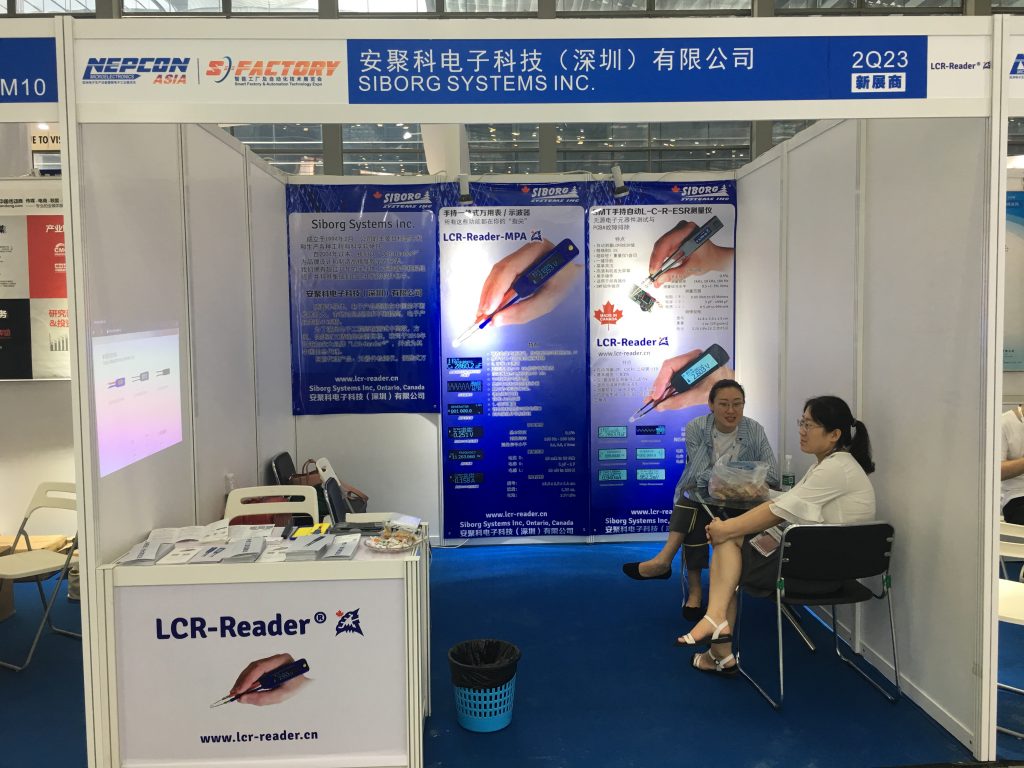
Siborg took LCR-Reader-MPA to Nepcon Asia to show off their line of LCR-Reader multimeters with a focus on the MPA devices. Their newest business partner, AI-Rox Polytoronics, representing Siborg in China.

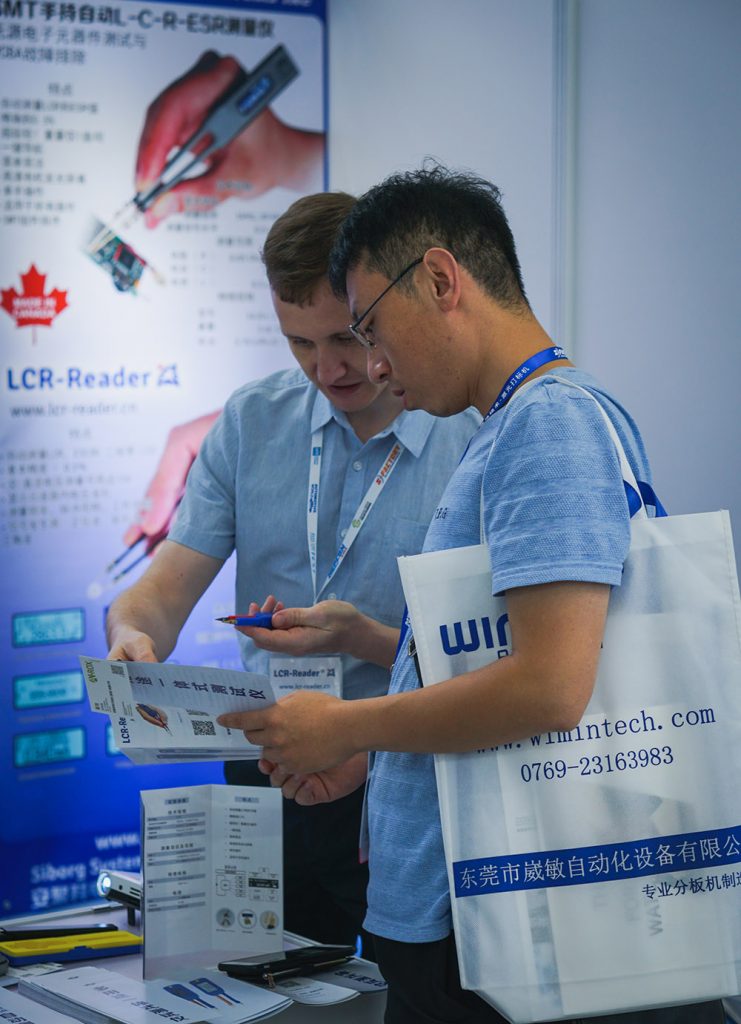
Nepcon Asia in Shenzhen showed great interest in the device. Many of the leading manufacturers come to the show looking for new and exciting technology; many showed great enthusiasm about testing unknown components with speed and accuracy. Most were excited about the large range of test options available on the device.

“There was a definitely a buzz from the audience. People were excited about fast and accurate measurements, no set-up and was also mentioned a lot. When we started presenting the device and mentioned that there would be a Bluetooth model in the future, people really got excited. Major manufacturing companies from Shenzhen were there and spoke highly of the ability to remotely record test measurements in real-time. This is a very practical ability for quality control.” says Director Michael Obrecht

New Generation Ring Coil Tester

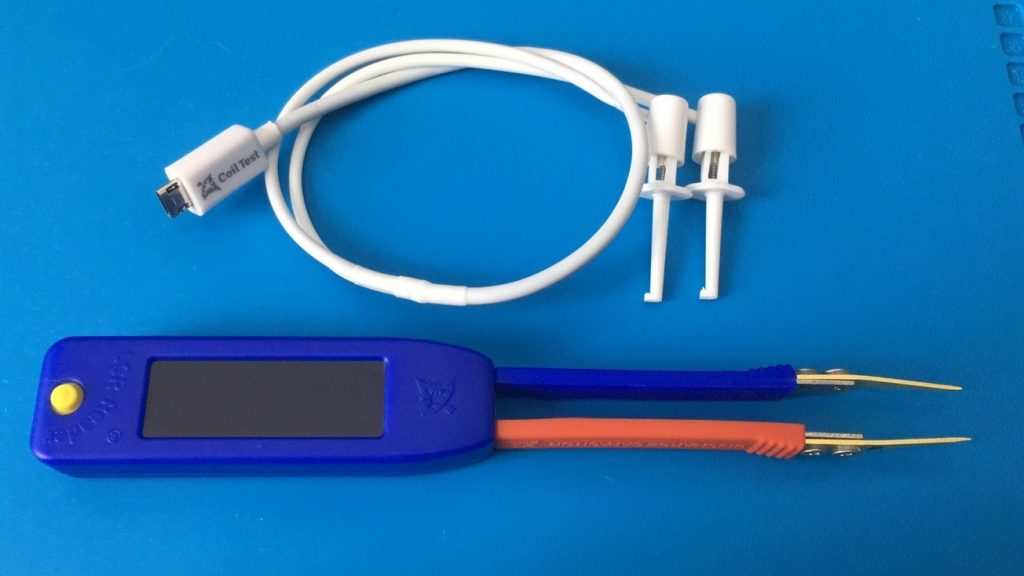
Siborg System Inc. has added a Ring Coil Tester to their line of testing equipment for use with the LCR-Reader line of multimeters.

LCR-Reader-MPA with Coil Ring Tester

Basic inductor or coil tests can be done using any LCR meter, like LCR-Readers. When testing, if the device shows any continuity or reading this shows that the coil winding is not destroyed. Often, the coil reading may show a slight deviation in values that is only detectable by knowing the exact original values of R or L. If there is one or a few turns of the winding that have short, the values would only show a slight variation.

Using the Ring Test method is a proven accurate method of finding short turns in a coil. This method has been used for repairing old-style audio-video equipment that employ flybacks, deflection yoke windings, motors, chopper transformers, main transformers, VCR video and other magnetic heads.

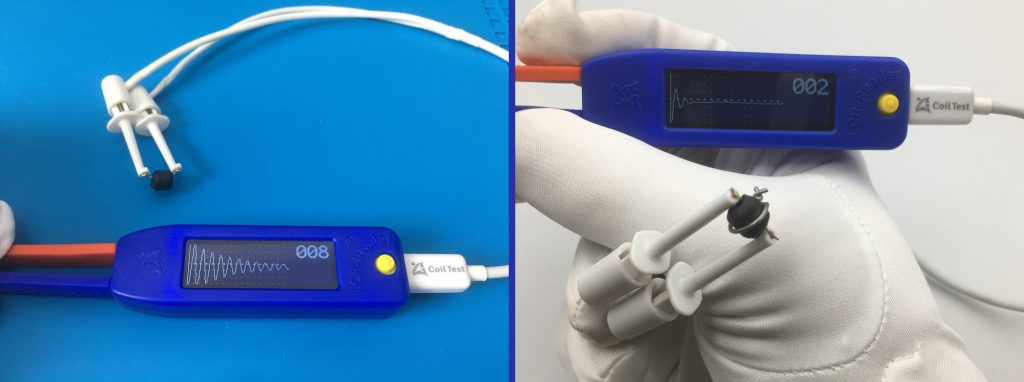
The Ring Test Method is based on the theory that if a faulty coil or transformer has shorted turn(s) in one of the coils, the Q-factor of the transformer is drastically redacted. when an impulse is applied, a faulty transformer will resonate with a highly damped oscillation while a good one will decay graduall.

When connected to a high quality capacitor across one winding of the investigated device and a pulse is applied to the parallel resonant circuit, the waveform across the resonant circuit will produce a decaying oscillation. It will do this for at least a few cycles if the coil is good. The oscillations will be strongly damped and only complete one or two cycles if there is a shorted turn in any of the magnetically coupled coils of the device. A short turn can also be applied, if possible, to compare the behavior with and without the short turn. If no change is detected, there must be a shortened turn in at least one coil.

To use with LCR-Reader-MPA, connect the Ring Coil Tester using the micro-USB port on the device and connect a coil by the hook connectors. Set the MPA to “winding turns” in the menu. The display will show the excitation response from the coil. The figures below shows the difference between a good or bad coil. The shorted turn is connected and displays a significantly higher dissipation factor and therefore a fewer number of oscillations following the impulse on the coil.

End of Year Sale

Siborg is hosting an end of year sale featuring LCR-Reader, LCR-Reader-MP, Smart Tweezers and other items from the LCR-Reader Store.

The sale stars December 17th, 2018 and will end on January 1st, 2019 and includes the LCR-Reader Store and Siborg’s Amazon sales channels in USA, Canada, France, Germany, Spain and Italy.

LCR-Reader Store – One Stop Shop for LCR/ESR Meters

The LCR-Reader Store from Siborg Systems Inc. offers a wide selection of handheld digital LCR/ESR meters, accessories and parts. The devices available are as follows:

  • LCR-Reader-MP: This is the newest model available from Siborg. The LCR-Reader-MP or Multipurpose has the highest basic accuracy of 0.1% and the widest selection of test features and functions over all LCR-Reader and Smart Tweezers devices. These features include:
    • Automatic LCR, Equivalent Series Resistance and Diode/LED measurement
    • Basic accuracy better than 0.1%
    • AC/DC voltage measurement up to 15 V
    • Oscilloscope Transient Voltage display for up to 100 kHz
    • Measurement of supercaps up to 680 mF
    • Measurement of Frequency, Pulse period, Duty Cycle up to 400 kHz
    • Signal Generator: Sine, Rectangle, Triangle pulse shapes up to 100 kHz
    • Diode and Continuity test}
    • Two Test Signal levels, Automatic Test Signal Reduction to 0.1 V for in-circuit measurement
    • Easy Short/Open Calibration, Offset Removal
    • Handling of components as small as 0201 size (about 0.3 mm)
    • Display of active and reactive impedance components
    • Adjustable test signal frequencies of 50, 100, 120 Hz, 1, 10, 20, 30, 40, 50, 60, 75 and 100 kHz
    • Jog-wheel navigation
    • 2 oz. weight, ergonomic design
    • Backlit LCD display
    • NIST traceable calibration certificate


  • LCR-Reader: The LCR-Reader is Siborg’s best selling device, which features a 0.5% basic accuracy with minimal features. This device was created as a lower cost alternative to other tweezer-based devices. LCR-Reader is able to automatically determine the type of component and select the best test range for that component. The one-button navigation allows users to select the test mode they desire. Features include:
    • 0.5% Basic Accuracy
    • Fully automatic L, C, R and ESR measurements
    • Manual mode selection
    • Instantly displayed results
    • 1 oz. weight
    • One-button navigation
    • NIST Traceable Calibration Certificate
    • OLED display
      • LCR-Reader Pro and LCR-Reader Pro Plus: These are LCR-Reader Task Kits that include an LCR-Reader device with calibration certificate and accessories (battery, Kelvin Probe Connector Kit, spare tips, charger. Note: accessories depending on task kit selected).


  • Smart Tweezers and Smart Tweezers with Bluetooth: Smart Tweezers are the original tweezer-based LCR meter with a 0.2% basic accuracy and multiple test features, including;
    • 0.2% basic accuracy
    • Manual and Automatic L, C, R, ESR, and Z test mode
    • Component sorting with 1%, 5%, 10% and 20% variable tolerances
    • Adjustable test signal levels
    • Diode/Continuity/Short testing
    • Parasitic offset subtraction
    • 1 oz. weight
    • NIST Traceable Calibration Certificate
    • 4-way joystick navigation
    • OLED display
      • Smart Tweezers with Bluetooth is able to connect to PC (ie: NI Labview, Tera Term, etc), Android and iOS to send and receive measurement data over a real-time connection. When connected, users are sent a comma separated string of values representing the outcomes, including the type of component, main and secondary values, and test parameters used. The ability to record all measurement data is invaluable for incoming quality control. The newest update to the device allows users to send information to the Smart Tweezers device and the ability to set parameters that components must meet. This is done by the user creating a profile in the receiving software. When testing, the component must meet this criteria before being granted a pass or fail by the software.
      • Note: the Bluetooth receiver stick is required to connect with PC and LabView 
  • LCR-Reader/Smart Tweezers Kelvin Probe Connector:   The LCR-Reader Kelvin Probe Connector is a shielded two-wire device that can be used as a full probe station. When connected, the LCR-Reader or Smart Tweezers can measure components that are larger than the tweezers’ gap. It is easy to connect to the device, simply remove one of the gold-plated tweezer tips and replace with the flat connector. All extension accessories screw into the other end. The two-wire connection eliminates additional offsets.
    Note: can be used with LCR-Reader, LCR-Reader-MP, Smart Tweezers and LCR-Reader Colibri.
  • Siborg also offers Task Kits that combine a device with accessories; when purchased, the task kits give a greater discount than buying a device and each accessory separately.

See everything Siborg has to offer at the LCR-Reader Store

New LCR-Reader-MP Introductory Video

Siborg has released a new introduction video for LCR-Reader-MP. The video goes over the basic features and functions of the multipurpose device. It also shows how to set basic settings in the device. The video has been published on Youtube.

LCR-Reader-MP is a new model in the LCR-Reader family of handheld LCR- and ESR-meters. The device has a 0.1% basic accuracy and various test modes and features.

Features include:

  • Automatic and manual LCR, ESR, Diode/LED measurements
  • 0.1% basic accuracy
  • Diode/LED and Continuity testing
  • AC/DC voltage measurements
  • Frequency, Pulse Period and Duty Cycle measurements
  • Oscilloscope Transient Voltage display up to 100 kHz
  • Signal Generator with Sine, Triangle, and Rectangle pulse shapes
  • Two test signal levels; Automatic Test Signal Reduction to 0.1 V for in-circuit measurements
  • Measures components to a 0201 size (about 0.3 mm)
  • Displays active and reactive impedance component display
  • 2 oz. weight
  • Li-Ion battery with micro-USB charging

Recently, Siborg had sent the LCR-Reader-MP to Navair Technologies for calibration. After receiving the results, Siborg is able to issue a NIST traceable calibration certificate for the device. The LCR-Reader-MP has also received FCC certification.

The LCR-Reader-MP is now available for pre-order from Siborg in the online LCR-Reader Store.

LCR-Reader-MP Multipurpose LCR/ESR-meter
Multipurpose LCR, ESR and Diode/LED tester from Siborg Systems Inc.

Siborg Offering New Multi Purpose Device: LCR-Reader-MP

LCR-Reader-MP Multipurpose LCR/ESR-meter
Multipurpose LCR, ESR and Diode/LED tester from Siborg Systems Inc.

Beginning after September 1st, 2017, Siborg is offering a new multipurpose device, the LCR-Reader-MP. This device has a basic accuracy better than 0.1%, a 100 kHz test frequency and more features than Smart Tweezers ST-1.

The LCR-Reader-MP offers many features and measurement modes, including AC/DC voltage measurements, signal generation, oscilloscope mode, pulse counting, frequency measurements, LED and diode testing and more. One of the most important features of the device is the 100 kHz test frequency that allows for 1 nH resolution for inductance measurements and 0.01 pF for capacitance.

The new device is especially helpful when testing large capacitances up to 680 mF using the ‘Large Capacitance’ mode. This will allow electrolytic capacitors to be measured at 120 Hertz with the ESR being measured at 100 kHz according to the regular electrolytic capacitor test conditions. When using the ‘Large Capacitance’ mode, the device will automatically reduce the test frequency to 25 Hertz which allows for reasonable accuracy. The device also offers a wide range of test frequencies for the best results depending on the task; these include: 50, 100, 120 Hz, 1, 10, 20, 30, 40, 50, 60, 75 and 100 kHz.

The LCR-Reader-MP features an oscilloscope mode for analyzing voltage wave forms with frequencies up to 100 kHz on an active circuit board. This mode is very useful when used in conjuncture with the LCR-Reader Kelvin Probe Connector. The Probe Connector extends the reach of the multimeter, allowing for components larger than the tweezers’ spread to be measured and allows to check wave forms at various nodes on the PCB.

The device does have some downsides: a rather high test signal source resistance of 1 kOhm and a maximum test signal of 0.65 Vrms which is not enough for reliable evaluation of some ceramic capacitors which can result in lower than actual capacitance values.

LCR-Reader-MP is slightly larger than LCR-Reader and Smart Tweezers; at 2 oz., it is twice as heavy and is almost double the width. Though larger, the MP device features a larger screen with better readability.

Features on LCR-Reader-MP:

  • Automatic L-C-R, ESR and Diode/LED measurements
  • Better than 0.1% basic accuracy
  • Signal Generator: Triangle, Rectangle and Sine pulse shapes up to 100 kHz
  • AC/DC voltage measurements up to 15 V
  • Current measurements
  • LED/Diode and Continuity measurements
  • Easy Short/Open calibration and offset removal
  • Oscilloscope Transient Voltage display up to 100 kHz
  • Measurement of Frequency, Pulse Period, Duty Cycle up to 400 kHz
  • Two Test Signal Levels: Automatic Test Signal Reduction to 0.1 V for in-circuit measurement
  • Handles components as small as 0201 sizes (0.3mm)
  • Displays active and reactive impedance components
  • Li-Ion battery with micro-USB charging port
  • 2 oz. (60 grams) weight

LCR-Reader-MP will be available after September 1st, 2017. Siborg is offering an introductory price of $388.99 USD and will be taking pre-orders. The devices will be shipped as they become available.

Siborg Systems Inc. is Offering a Discount on All Devices and Test Tweezers Until the End of September

Until September 30th, 2016, Siborg is offering their LCR- and ESR-meters and Test Tweezers devices for 10% off in their online sales channels, including the LCR-Reader Store, Amazon.com, Amazon.ca, and Amazon.co.uk.

This sale includes all LCR-Reader and Smart Tweezers task kits, as well as the other tweezer-like devices like LED Test Tweezers, SMD Multimeter Test Tweezers and LCR-Reader Probe Connector.

The new model of Smart Tweezers, the ST5S-BT that allows users to connect and remotely record their measurement values in real-time over Bluetooth connection is also on sale.
lcrreaderprousNow is the perfect chance to pick up an LCR-Reader Professional Kit. This kit includes a pre-calibrated LCR-Reader, NIST traceable calibration certificate, charger and micro-USB cable, spare bent tweezer probes, an extra battery (only available in the LCR-Reader Store) and manuals.


Visit the LCR-Reader Store, Amazon.com, Amazon.co.uk or Amazon.ca for your chance to get Siborg’s devices at a discount from now until September 30th, 2016.